
UHF IPTV Plans & Pricing – Choose Your IPTV Subscription– TV
UHF IPTV often get lumped together because both end with the same result, a picture on the screen. Yet they work in very different ways, and that difference matters when someone is buying, selling, or supporting a service.
If you sell UHF IPTV in the UK, small misunderstandings can turn into big complaints. Customers may expect aerial-style reliability from an internet stream, or assume internet TV will include every local broadcast by default. A clear explanation at the start saves a lot of friction later.
UHF and IPTV use different paths to reach the screen
UHF IPTV stands for Ultra High Frequency. In plain terms, it is the part of the radio spectrum used for many terrestrial TV broadcasts. In a typical home, a roof aerial picks up that signal and sends it to a TV or tuner. No broadband is needed for that part.
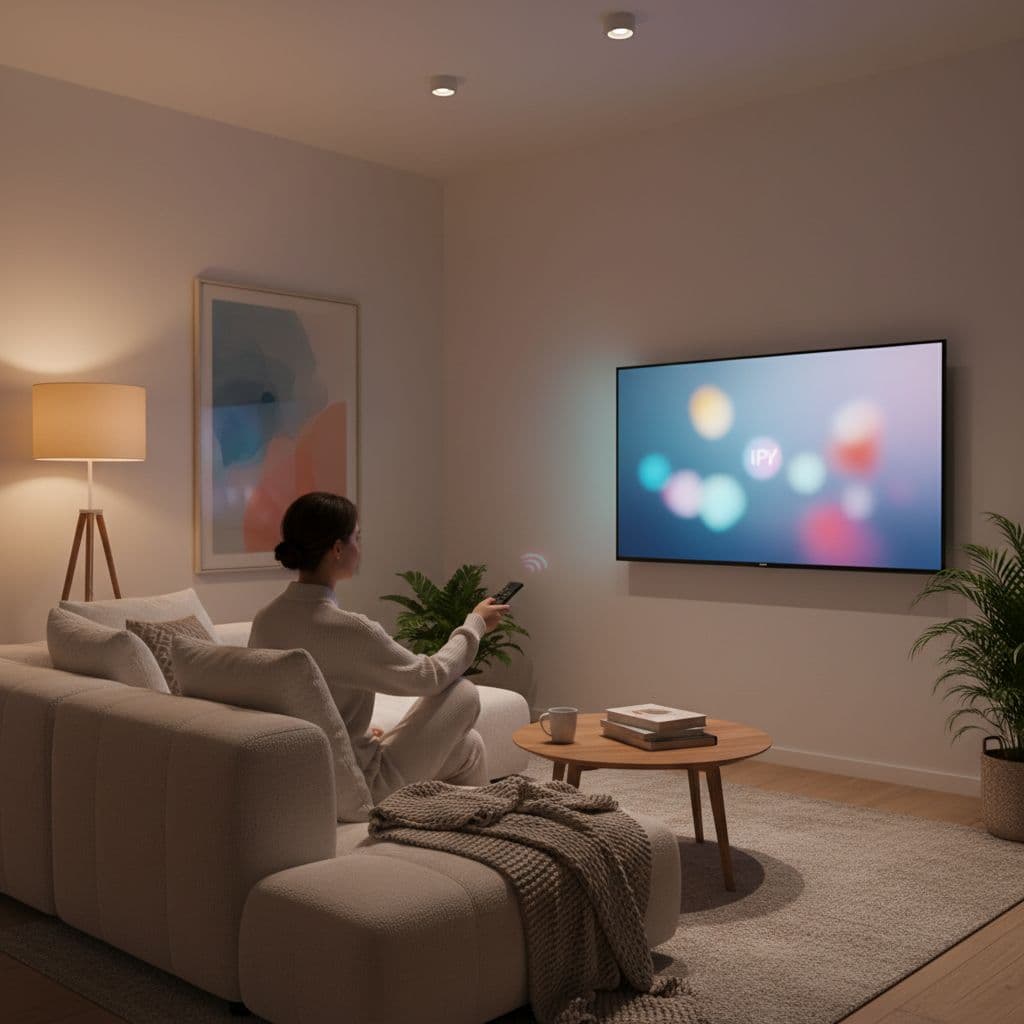
UHF IPTV works in a different lane. It sends television over an internet connection, usually through an app, a set-top box, or a smart TV platform. Live channels, catch-up, and video on demand all travel as data. The screen may look familiar, but the delivery method is not.
This quick comparison clears up the basics:
| Feature | UHF TV | IPTV |
|---|---|---|
| Delivery path | Broadcast signal through the air | Video data over broadband |
| Usual gear | Aerial and TV tuner | App, box, or smart TV with internet |
| Common weak point | Poor coverage or aerial issues | Slow broadband or weak Wi-Fi |
| Best fit | Local live TV | On-demand viewing and wider channel access |
Latency can differ too. UHF often feels closer to live because the signal is broadcast straight out to the home. IPTV may run a little behind because the stream has to be encoded, delivered, and buffered before it appears on screen.
Why this matters for an IPTV reseller in the UK
If you’re an UHF IPTV reseller in the UK, this is not a small technical footnote. It shapes what customers expect on day one. Many people do not ask for “UHF” or “IPTV.” They ask for BBC, sports, movies, kids’ channels, catch-up, and a remote that does not make life harder.
That means you have to translate needs into a setup that fits the home. A customer with weak broadband and solid aerial coverage may still want UHF IPTV, but they need honest advice about buffering risk. Another home may have great fiber and no usable aerial, so IPTV becomes the main route for television.
There is also a rights issue. UHF broadcasting sits inside licensed terrestrial systems. UHF IPTV can be legal, but only when the provider has permission to distribute the content. A reseller should know where the streams come from before advertising channel lists, especially when customers ask about premium events or region-locked channels.
The best setup often mixes IPTV with UHF
Many homes do not need to choose one or the other. A mixed setup often works better. UHF IPTV can carry core local channels with steady performance, while UHF IPTV adds catch-up, premium content, international stations, and viewing on more than one device.
That blend is useful because each method solves a different problem. UHF is simple and direct when the aerial and coverage are good. UHF IPTV is flexible and broad, but it needs a healthy internet connection inside the house, not only at the router but also where the TV sits.
The same logic shows up in guest houses, pubs, and shared buildings. Managers may keep local channels on the aerial feed for stability, while UHF IPTV fills in extra entertainment across rooms or lounge screens. The result is less strain on one single system.
A simple explanation builds trust
UHF IPTV even when they land on the same screen. One relies on terrestrial broadcast signals. The other relies on broadband, apps, and network quality inside the home.